Day-one issuance
A new starter can hold a working ID before any plastic exists, which matters most in the first week of the year.

A digital ID is not a photograph of a card. It is the same credential in another form, one serial number, one verification code, issued and revoked alongside the plastic, added to Apple Wallet or Google Wallet in a couple of taps. Anyone can check it on the spot, by scanning its QR code or by tapping the link on the pass.

A digital ID is only worth carrying if somebody can check it. Every pass can be verified on the spot, two ways, and the person checking needs no app and no account.
Either way the answer is the live one: the photograph on record, the name, and whether the card is valid right now. A card that has expired, or been reported lost, stolen or revoked, says so, and the printed card gives exactly the same answer.
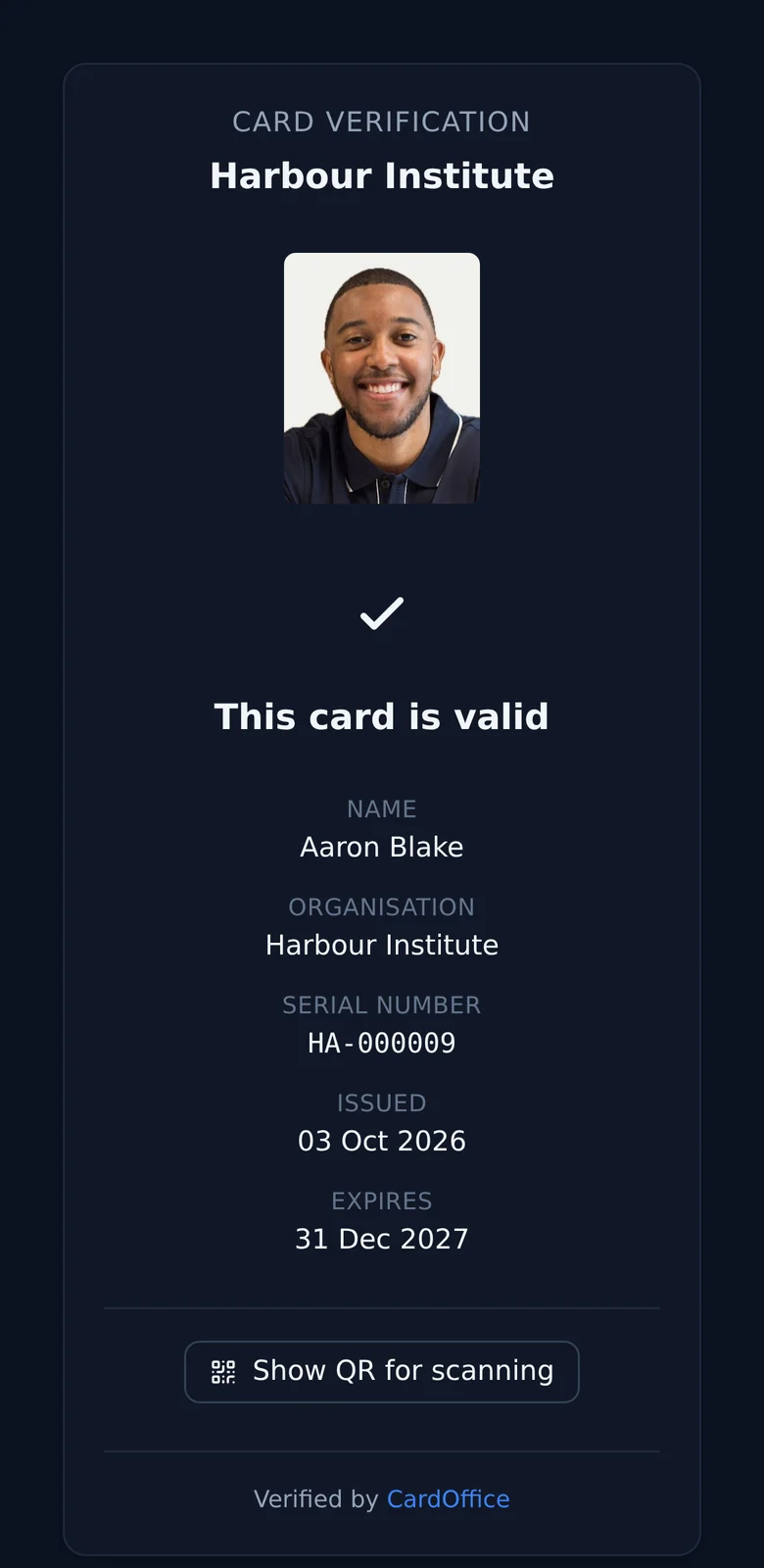
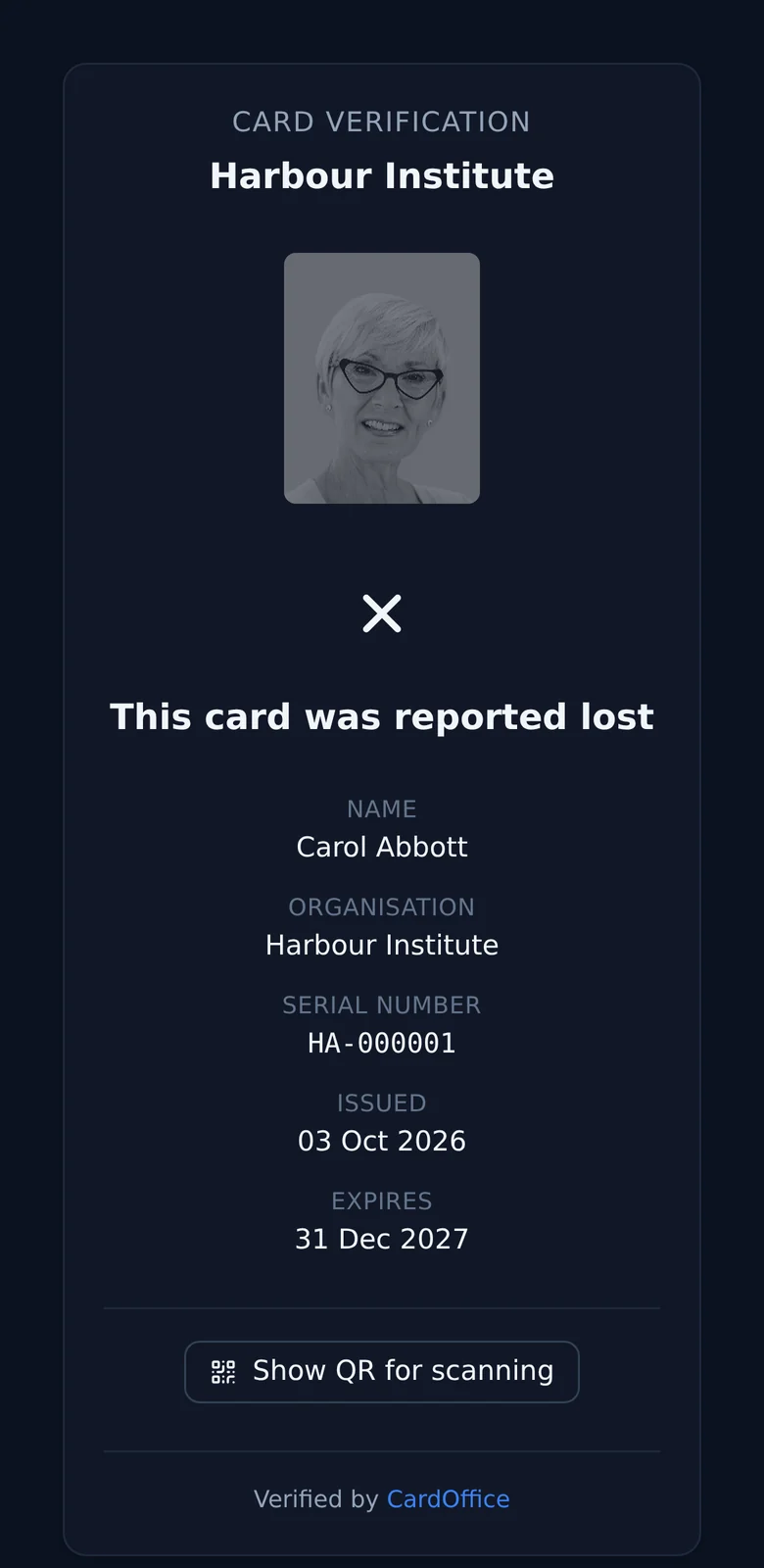
The verification page, for a valid card and for one reported lost. Fictional institution; the portraits are stock photographs of models.
When somebody is issued a digital ID, it carries the same serial number and the same verification code as their printed card. Scanning either one gives the same answer, because there is only one credential underneath.
The advantage of a digital credential is not convenience, it is control. A printed card cannot be recalled once it is in a pocket. A pass can be updated or struck through remotely, within seconds.
Not a picture of a card. A native pass on each platform, built from the fields each one defines, carrying the same serial number and verification code as the printed card.
 NameEmma Hall
Illustrative designs. The institution and cardholder shown are fictional, and the QR codes are decorative rather than scannable. Your own pass layout, labels and colours are set in the designer.
Students forget their card. They do not forget their phone. A digital ID cuts replacement volume, shortens the queue at the card office in week one, and gives a new enrolment something usable on day one, before their printed card has been produced.
A new starter can hold a working ID before any plastic exists, which matters most in the first week of the year.
A forgotten card is a replacement request. A phone in a pocket is not.
When somebody leaves, access ends when you say so, not when they hand something back.
By scanning the QR code on the pass, or by tapping the Verify this card link the pass carries. Both open a public verification page showing the photograph on record, the name and whether the card is valid right now, with no app and no account needed. A card that has expired, or been reported lost, stolen or revoked, says so.
Yes. The same issuance produces an Apple Wallet pass and a Google Wallet pass, so cardholders use whichever phone they carry.
Only if you want it to. Most institutions issue both, because doors, libraries and printers often still read a physical card. The platform supports digital-only, plastic-only, or both on the same credential.
Revoke the digital ID and the pass is struck through on their device. You can revoke the digital form on its own, leaving the printed card working, or revoke the whole credential at once.
The pass carries the same QR code as the printed card, resolving to a public verification page that states whether the credential is valid and, if not, why.
No. The link is emailed to them and opens directly, so somebody who has never signed in to the portal can still add their ID to their wallet.
Tell us how you issue cards today and we will show you what this looks like for your institution. No obligation, and no sales script.